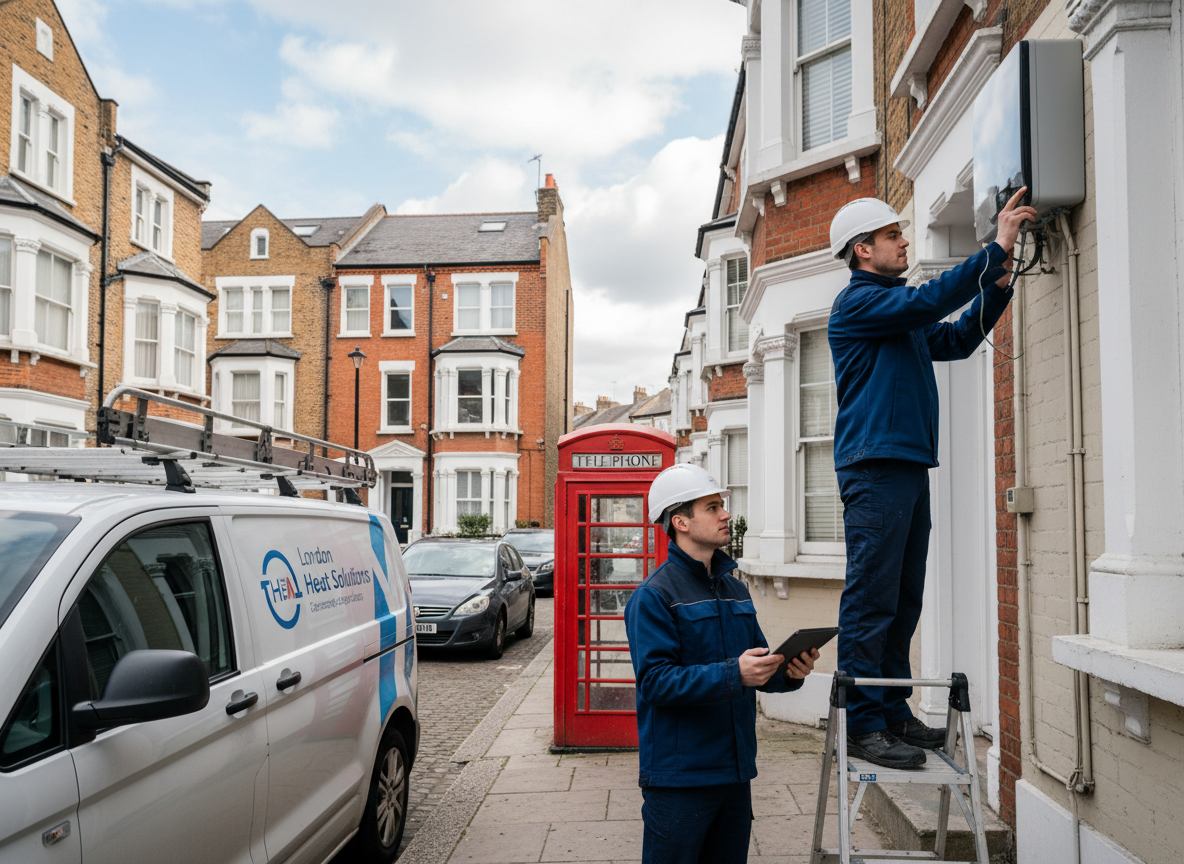
London's housing stock ranges from 19th-century terraces in areas like Southwark and Westminster to post-war estates and contemporary apartments near the Thames. Electric heating systems must account for varying insulation levels, shared walls in terraces, and limited space for new cabling runs. Older properties often have single-phase supplies that limit total load, requiring careful calculation of circuit capacity before any new heaters are fitted. Damp conditions common along the river can affect placement of controls and sensors.
Electrical work in Greater London falls under Part P of the building regulations, which means all new circuits must be designed and tested to avoid overloading existing consumer units. In dense neighbourhoods around Westminster Bridge Road, access for larger components can be restricted by narrow stairwells and listed building constraints. Installers routinely check for aluminium wiring in 1960s blocks and plan upgrades accordingly. Smart controls are increasingly fitted to manage peak-time tariffs that apply across the capital.
Twenty-four-hour availability matters when a system fails during cold snaps that hit London each winter. Our base at 11-12 Whitehorse Mews allows quick response across central and south London postcodes. Every installation begins with a load assessment of the existing board and a review of meter location, which is often tucked away in communal areas. Final commissioning includes demonstrating timer and thermostat functions so residents can optimise running costs on the spot.
Technician insight
In London, the thing that catches most people out with Electric Heating Installers near me is the state of the consumer unit in pre-1960s terraces around Westminster and Southwark. Many still run on old fuse boards that cannot accept additional load without a full upgrade, and access is often blocked by kitchen units or under-stair cupboards.
Southwark Terrace Conversion
Homeowner in a Southwark Victorian terrace reported cold rooms on the upper floor. Survey showed the original 1960s fuse board lacked spare ways and the ring circuit was already near capacity. We ran a new dedicated circuit from the incoming supply, fitted slimline electric radiators with individual room thermostats, and tested the installation under load. Heating is now consistent and the system stays within the supply limit.
How it works
- 1
Initial Consultation
Discuss heating needs, property type and existing electrical setup over the phone or on site.
- 2
Site Survey
Inspect consumer unit, wiring routes and room layouts in the specific London property.
- 3
System Design and Quote
Propose heater types and controls suited to the building's age and supply capacity.
- 4
Installation and Commissioning
Fit equipment, connect circuits, test and demonstrate operation to the homeowner.
Pricing
Upfront quotes provided after survey; final cost depends on number of rooms, existing wiring condition and any consumer unit upgrades needed.