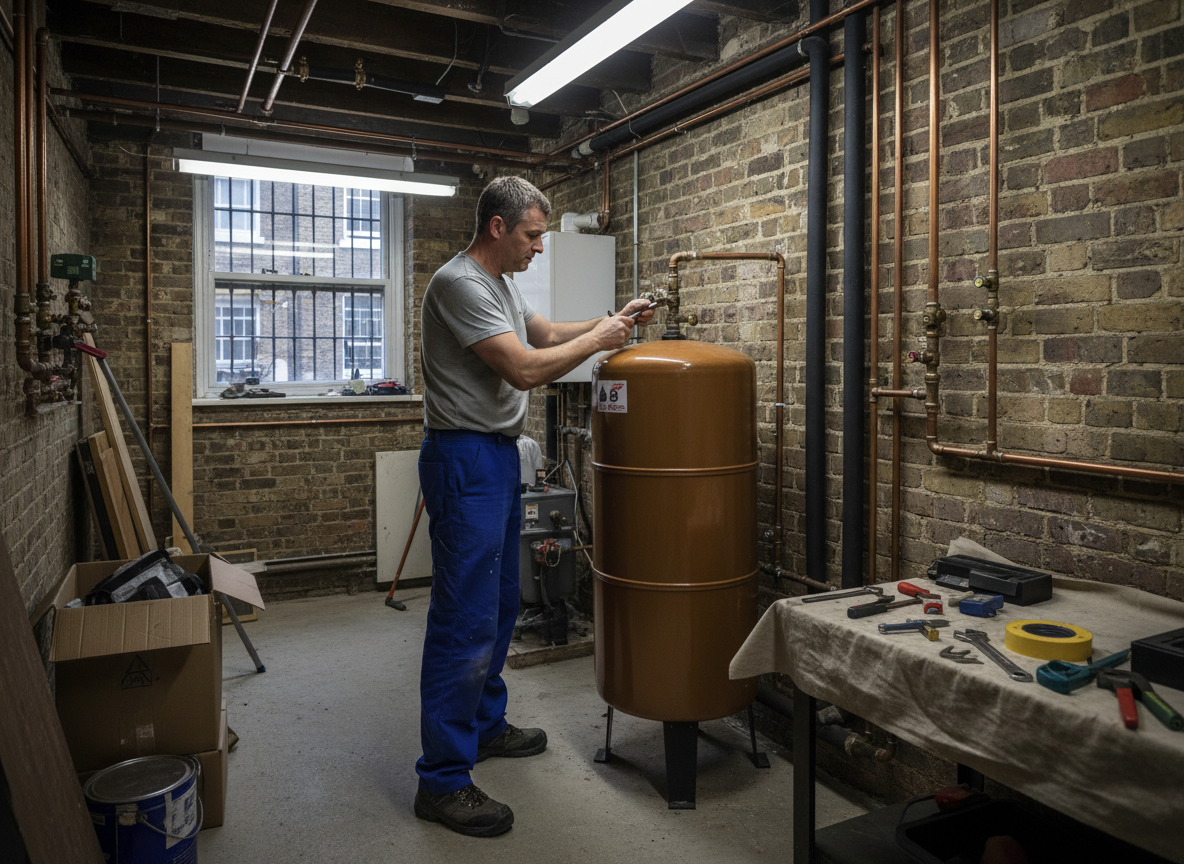
London's housing stock ranges from Victorian terraces in Southwark to mid-century flats near Westminster Bridge Road. These buildings often feature narrow stairwells, low ceilings and outdated pipework that complicate cylinder swaps. Electric cylinders must fit within existing airing cupboards while meeting current Building Regulations Part G for hot water storage. We routinely adapt installations around original cast-iron pipe runs and shared risers common in SE1 postcodes.
Modern electric cylinders use stainless steel or glass-lined vessels with immersion heaters rated for 24/7 operation. In damp London basements we add extra insulation and condensate management to counter high humidity. We also account for the capital's variable water pressure, fitting pressure-reducing valves where mains supply exceeds cylinder ratings. All work follows manufacturer torque settings and includes new isolation valves to simplify future maintenance.
Access is the recurring constraint. Properties around the South Bank frequently require cylinder sections to be carried through windows or temporary wall openings. We survey loft and under-stair locations first, then plan any necessary temporary supports for joists weakened by age. Final commissioning includes checking thermostat calibration and ensuring the cylinder complies with electrical separation distances from other services.
Seasonal demand peaks in autumn when colder Thames Valley temperatures increase hot-water use. Older cylinders in unheated cupboards lose efficiency quickly, so we recommend models with higher insulation values for these conditions. Every job ends with a handover pack showing the new cylinder's model number and isolation points for the homeowner.
Technician insight
In London, the thing that catches most people out with Water Cylinder installer is the narrow Victorian stairwells and low doorways around Westminster Bridge Road and Southwark, where we regularly have to remove banisters or window frames just to get a standard 210-litre cylinder into the airing cupboard.
Cylinder Upgrade in a Southwark Terrace
The homeowner reported lukewarm water and frequent immersion trips in their 1890s terraced house. We found a corroded original copper cylinder with no insulation sitting in a cramped cupboard. We split the new stainless cylinder into two sections for access, rerouted the cold feed around a supporting joist, and installed a modern dual-immersion unit. The system now delivers consistent hot water without nuisance trips.
How it works
- 1
Site Survey
We measure the existing cylinder space, check electrical supply and note pipe routes in the property.
- 2
Cylinder Selection
We match capacity and immersion heater rating to household size and available cupboard dimensions.
- 3
Removal and Preparation
Old cylinder is drained and disconnected; access modifications are made if required.
- 4
Installation and Commissioning
New cylinder is positioned, connected, electrically tested and set to correct temperature.
Pricing
Prices depend on cylinder size, access difficulty and any required electrical upgrades; we always provide a fixed quote after survey.